The Power of Strengthening the Hip Flexors with Susi Hately, BSc. Kin, C-IAYT Yoga Therapist
A 2 Hour Deep Dive Blending Therapeutic Biomechanics and Yoga Therapy for Functional, Coordinated Hip Flexors
- On Demand

Why Do My Hip Flexors Feel Weak, Tight, or Pinchy?
If you’ve ever tried to “fix” your hip flexors, you’ve probably noticed:
- stretching doesn’t change anything for long
- lunges make them grip or pinch
- core work makes them fire even more
- walking or running makes them feel tired or tight
- reclining twist? still tight.
- pigeon? still tight.
- legs-up-the-wall? still tight.
It starts to feel like no matter what you do…
your hip flexors are always talking.
And not in the way you want.
Maybe you’ve wondered:
- “Are my hip flexors weak or tight… or both?”
- “Why do they grip the moment I try to lift my leg?”
- “Why do I feel this in my hip flexors during core work?”
- “Why does my back flare up when my hip flexors do?”
- “Is this a psoas issue? An iliacus issue? Something else?”
These are smart questions.
And the answers aren’t often found in stretching more.
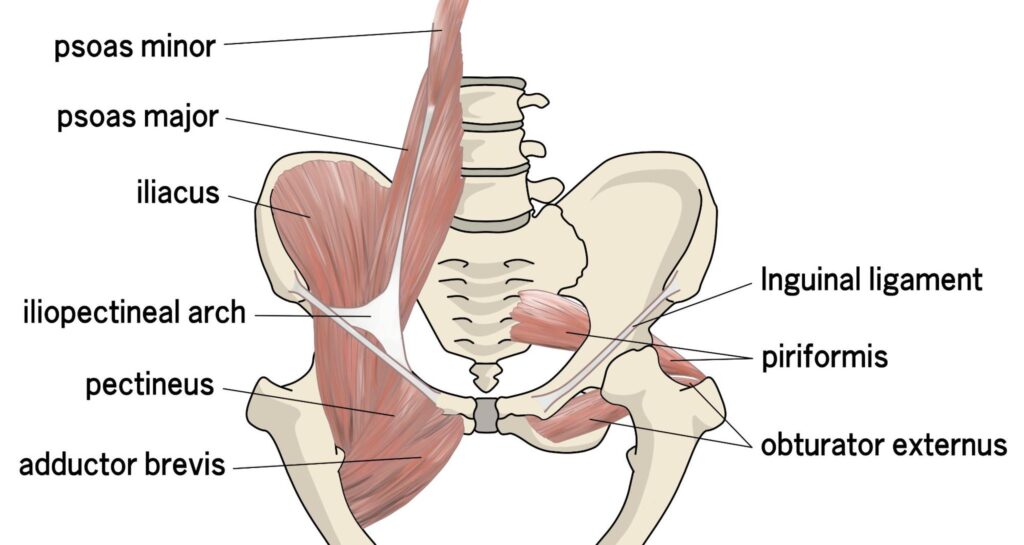
The Surprising Truth About The Hip Flexors
Most hip flexor problems aren’t tightness problems.
They’re coordination and strength problems.
Hip flexors can feel tight or pinchy when:
- they’re trying to stabilize a pelvis that isn’t stable
- the lower and abdominal are coordinating well
- the ribs and pelvis aren’t communicating
- the inner thighs or glutes are over/underworking
- there are compensations in gait patterning
- the breath is held or limited in some way
These are all reasons why hip flexors might tighten, grip, fatigue, or ache not because they’re “short”…or” locked long”(though they might be), but because they’re overworking and under-supported.
I have been trying to figure out my hip flexors for years, and have done the stretching, the strengthening but nothing… now I understand the relationships with my foot, pelvis, breath now my hip flexor strengthening is so much more effective
~ Besty.
Let’s just start with this – I am 65 years old. I am active, I walk, I ride my bike, I like to hike. And my hip flexors always felt tight, and I just thought it was because of my activity I did and my age.. And in part it is my activity and age . . ., but holy smokes . . . the relationship to my shoulders blew my mind. Now I am much more nimble and balanced.
~ Sheryl
Strength . . . done with proper coordination . . . is what can change this.
Here are what people are saying
Stephanie
Lucy
Dena
Why Strengthening Matters
Most people think strengthening is about building a muscle.
In my world, strengthening is about building a relationship.
Your hip flexors don’t work in isolation.
They work in relationship to:
- your breath and diaphragm
- your pelvic floor
- your deep abdominals
- your rib–pelvis rhythm
- your inner thighs, glutes, and adductors
- your gait pattern and spinal mechanics
So when hip flexors feel “weak,” it’s rarely a local problem.
It’s a systems problem.
Strengthening matters because it gives the hip flexors something they rarely get:
a stable, well-timed, well-coordinated environment to operate in.
When that environment improves, hip flexors don’t have to grip, brace, or over-help.
Here’s what strengthening (done well) actually does:
1. It Restores the Hip Flexors’ True Job
Hip flexors are meant to flex the hip, not hold you together.
When the pelvis isn’t stable, or the ribs flare, or the abdominals mis-time, hip flexors can often step in as emergency stabilizers.
Strengthening – with clean mechanics – reclaims their original role:
– supporting leg swing
– supporting stride
– helping you move forward with ease
– instead of trying to do 8 other jobs they were never designed for.
2. It Improves Load Transfer
Healthy movement is all about how load travels through your body.
When load moves well:
- joints don’t pinch
- muscles activate smoothly
- you feel nimble, agile and not strained
When load can’t transfer, hip flexors often start “holding” – tightening, gripping, or fatiguing.
Strengthening improves the pathways of movement, so the load can flow:
from your foot…
to your pelvis…
to your spine…
to your shoulder girdle…
This is why clients say things like:
“My hip flexors feel better… and weirdly, my neck does too.”
It’s not weird.
It’s mechanics.
3. It Recalibrates the Nervous System
Gripping isn’t just a muscle issue — it’s a protective issue.
Your system only lets a muscle truly strengthen when it feels:
- safe
- stable
- supported
When a muscle is stabilizing in an ineffective way, your nervous system won’t let it relax OR strengthen properly.
Coordinated strengthening helps your brain realize:
“Oh… we’re safe. We can do this differently.”
That’s when real change happens.
4. It Builds Strength That Shows Up in Real Life
You don’t need stronger hip flexors on paper.
You need hip flexors that work:
- when you walk
- when you climb stairs
- when you walk uphill
- when you flow through yoga
- when you run
- when you lift
- when you carry groceries
- when you play with your kids
This workshop builds strength that transfers into all of that – not just into a single exercise.
5. It Creates Easeful Effort Not Tension-Filled Effort
When the hip flexors strengthen in relationship with the rest of your system, your body becomes:
- more efficient
- less tense
- more powerful
- less fatigued
- more fluid
You feel lighter.
Your stride smooths out.
Your low back softens.
Your core works without gripping.
Your breathing becomes effortless.
This is the difference between “doing exercises”and building coordinated, sustainable strength.
Hip Flexors manage the relationship between your:
- legs and pelvis
- pelvis and spine
- breath and core
- stride and propulsion
When these relationships are off, the hip flexors have no choice but to brace.
What actually helps them stop gripping is:
- clear pelvic mechanics
- a stable base to pull from
- proper abdominal timing
- effective posterior + lateral hip support
- strength that builds smooth load transfer
In other words:
You don’t stretch hip flexors into releasing.
You support them into releasing.
And strengthening them — the right way — is part of that support.
Ive been practicing all the principles + after doing a 60 -90 minute practices all week + moving w/ease + breath, I feel like I’ve just been moving + breathing, Prior to this course usually something is hurting, strained, overused, but I’ve interpreted it as “I’ve worked out”, it’s just so strange to go thru my day + night “pain free” …..that I feel like I haven’t “done” anything….so my brain is catching up with the novelty that I can do a strong practice + not feel pain. AND I am making progress in areas where I was weak /tight/both or lacked mobility. It’s just plain weird to not have twinges, tension during or after “practice”. This is how it’s suppose to be….functionalsynergy….?
~ Jennifer
I am Susi Hately, BSc. Kinesiology, C-IAYT Yoga Therapist
I have a BSC. Kinesiology and have been helping people reduce and eradicate pain for over 25 years. I have also been a bridge between the medical world and yoga.
As a young student of yoga, I began to combine the ancient practices of yoga with my BSc. Kinesiology at a Vancouver pain clinic. When I continued to encounter individuals, including yoga instructors, who accepted that their pain was “normal,” I began to explore how yoga was being taught and practiced. By designing therapy programs that utilized sound anatomical principles of kinesiology with the time-honoured practices of gentle yoga, I have enabled people to find pain relief, feel good, and rediscover vitality in their lives.
Two of my programs have been studied at the University of Calgary and both showed benefit for supporting people and their wellbeing. I am also the author and presenter of I Love Anatomy and Anatomy for Yoga Therapists.
I have been training teachers and health professionals in yoga therapy since 2001 and am the lead teacher in the highly successful C-IAYT Accredited Functional Synergy Yoga Therapy Program.
What You’ll Learn in This 2 Hour Workshop
Part 1: Understand What the Hip Flexors Actually Do
- The roles of the iliacus, psoas, rectus femoris, sartorius, and pectineus
- Why what feels “tight” can often be “weak + overworking”
- The difference between gripping vs. functional strength
Part 2: Biomechanics That Make or Break Your Hip Flexors
- How your pelvis moves relative to your thigh
- Where compensation shows up in gait and yoga
- Why core bracing often makes hip flexors worse
- How to create stability without tightening everything
Part 3: Strengthening Without Gripping
A guided series that helps your hip flexors work with the rest of your body, from your center outward . . .
- From feet to pelvis to shoulders and neck, you’ll sense how everything is connected.
- You’ll discover how to move without gripping, reduce that front-of-hip pinch, and build strength that shows up in walking, yoga, running, and lifting.
Who This Workshop Is For
This is perfect for you if:
- your hip flexors always feel “on”
- you feel pinching in lunges or squats
- you’re dealing with low-back flare-ups
- your hip flexors fatigue easily
- you’re an athlete, yogi, walker, runner, or mover
- you’re a clinician or teacher seeking more effective ways to translate your knowledge into exercises that make sense - and make a difference - for your clients.
No anatomy background needed just curiosity and a desire to feel better.

Ready to Strengthen Your Hip Flexors?
THE POWER OF STRENGTHENING THE HIP FLEXORS