Introduction (00:00.00)
You are listening to From Pain To Possibility with Susi Hately. You’ll hear Susi’s best ideas on how to reduce or even eradicate your pain, and learn how to listen to your body when it whispers so you don’t have to hear it scream. And now here’s your host, Susi Hately.
(00:23.19)
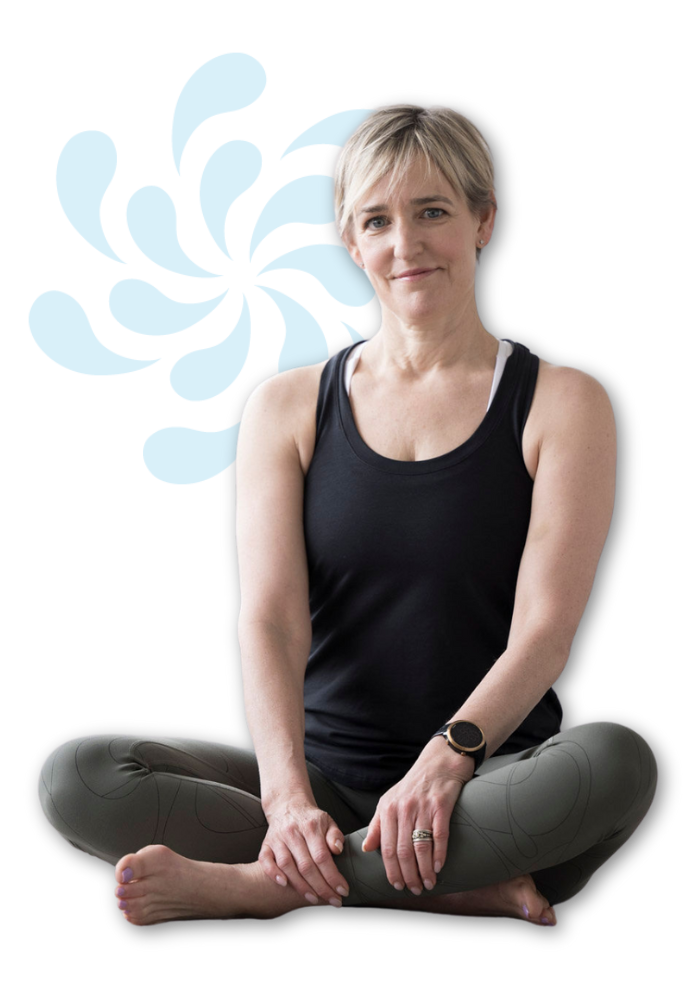
Susi: Welcome and welcome back. I’m really glad that you’re here because I have another interview that I want to share with you, and it’s along this whole notion that I’ve been sharing on this miniseries around becoming a movement detective. And today I have Kendra McCuine, and she’s from Massachusetts. She’s a trainee in the certification program, not that long.
I mean, she joined it for January, so we’re just a few months in, and she’s really started to take off with results with her clientele. So I thought who else would be an awesome interviewee for this, given just the short amount of time that she’s been training with me. And what, what I think you’re gonna get from this episode is really highlighting the distinction of what we learn when we are in TT-200 typically. Typically, not all the time, but typically.
And where that really serves us for what the what the required outcome is for that kind of training, but then the gap that exists given the reality of the people coming to see us in a yoga setting. So I’m really, really excited for you to hear about Kendra’s journey so far. So let’s get into it. Welcome, Kendra. I’m so glad that you’re here.
Kendra: Thank you so much. I’m so glad to be here.
Susi: So why don’t we just, like, get into it of tell me about you as a yoga teacher and—like, have you always—this is the one thing I don’t actually know about you. Have you always wanted to be more therapeutic? Like, even when you were doing teacher training, or was it something that kind of came upon you as you were teaching?
Kendra: I definitely wanted to be more therapeutic going into my yoga teacher training. But the funny thing is, I wanted to do yoga teacher training 20, 25 years, something like that. Like, when I was fresh out of college, I wanted to do it, and I’m so glad that I didn’t. I’m so glad that I waited, because I definitely wouldn’t have gone this direction back then, whereas it’s the perfect direction for me right now where I am in my life.
Susi: All right. Why?
Kendra: So my background is in education. I was a special education teacher for 20 years. So I developed a lot of skill around finding the “problem”, and I’m putting that in air quotes, but finding the problem and fixing it. So my job was, I taught reading. My job was to remediate what was holding a student back from being able to read.
Susi: Hmm.
Kendra: Without that skill, I don’t think I would be even interested in this work, or interested to the extent that I am now. But it’s also sort of the subject of this episode in terms of what we’ve unwound about that experience, and how I can bring the strengths of kind of looking at the picture and, and zooming in on things and zooming out on things. But I’ve definitely moved towards not wanting to remediate something, which we can talk more about.
Susi: That’s, that is interesting. So we’ll get there, but let’s first, what’s the distinction between, even in the short period—I mean, I’m still stunned, right? Like this is, it’s really has been such a short period of time. But you are seeing bodies differently…
Kendra: Very differently.
Susi: …than when you even took the intensive. So that’s like, what? October, November, December. Like what? Six, seven, eight months? What’s different between then, or before then even, and now?
Kendra: I can see, thanks to your guidance, Susi, I can see the parts of the body that need to move. And I was an English major, like I don’t have a background in anatomy and in kinesiology. But in this short period of time, I’ve been able to develop a sense of what should be moving, what shouldn’t be moving, but more importantly, like what is functioning really well that I can kind of focus on to bolster everything else.
So for example, when I’m at the gym now, I look around and I look at bodies, and I look, okay, is the leg bone moving into the hip socket? Is the pelvis tilting appropriately? Is the spine overcompensating? Is the person shifting into one side or the other? Are they doing something funny with their rib cage?
It’s fascinating to see all the ways that people come to movement and all the ways that people get the job done.
Susi: Yeah. Yeah. Mm-hmm. And what’s brilliant about that is that you’re not seeing it as how people are doing movement wrong.
Kendra: Mm-hmm. Mm-hmm.
Susi: Like you’re seeing it, particularly at the gym where people are adding load to their system. Like they’re adding weight in some form, and it’s just so amazing the way they get that weight over their head, or how they squat that weight, or how they lunge that weight and just the ways that people move, yeah, as you said, in order to get the job done. And they can get it done, but it may down the road lead to things. But it’s curious, right? There isn’t a perfect or bad movement until there is a problem really.
Kendra: Right. Right. Well, and in my own body, I’ve had a labral repair surgery in my hip almost six years ago. And even just watching myself move, when I realized that I wasn’t coming into hip flexion on that side and I was compensating majorly through my ribcage and my pelvis, and bringing that awareness into what was going on in that part of my body has helped my chronic pain there, like, a million times over.
Susi: Interesting. So you’re really aware of yellow lights and whispers and factors that contribute to it going out of balance.
Kendra: Absolutely.
Susi: Oh, that’s so cool. That’s really, really cool. So let’s now play with, like, before we started recording, you talked about the little bit of anatomy. If we even call it a little bit of anatomy that you received in teacher training. So when you finished teacher training, you talked about it being about a day or about an hour or something very, very small, like that was not your focus of TT, which is fine, every program has its direction and inclination. I mean, you already knew you wanted to be more therapeutic, but how did it leave you? Did it leave you wanting? Did it leave you doubtful? Did it leave you, “Oh my God, I’m gonna hurt people”? Like, what did it leave you as?
Kendra: It definitely left me very interested and, you know, my YTT was great. It was very heart-centered. Anatomy wasn’t the focus of it.But I read the anatomy book cover to cover. And I kind of, my physical therapist is also a yoga teacher, and she started giving me all of these anatomy books. So it kinda, it definitely sparked my interest, but I needed… There’s so much to anatomy, and it felt very overwhelming, and I needed more guidance around how to break it down because I couldn’t, like, I wasn’t gonna memorize every muscle, and that’s not necessary.
And I’ll back up from there. So that feeling of intimidation coming into this program, I was like, “Oh my gosh, am I gonna have to memorize every muscle?” Like, that feels very overwhelming. And the way that it’s been taught in this segmental, functional, movement-oriented way, feels very accessible.
And I think at the beginning, yeah, I was a little bit scared I was gonna hurt people, especially with osteoporosis or spinal surgeries. But being able to just see the segments moving and knowing kind of what their bodies are able to do and how far their range is right now, and knowing that I’m gonna be able to keep them in a range that feels easeful, I don’t feel like I’m…I’m not worried I’m gonna hurt people anymore.
Susi: Oh, isn’t that interesting? So it’s, you have more skill, and you’ve also got more ability just to be in the uncertainty—of who you’re interacting with.
Kendra: For sure. And to see a body as a body, not a body as a person with a labral tear, or a body as a person with a spinal surgery, or a body as a person with osteoporosis, because they’re all bringing their own physical background and, you know, all of the koshas, their whole being to that certain aspect of them.
Susi: Yeah, and that’s… I love how you say that because the reality is, is that number one, the people coming to our classes, whether you’re teaching a regular yoga class or whether you’re more into the gentle side or therapeutic side, is—people with the same diagnosis are experiencing it very, very differently, and rarely, I think, do we have people come in with one thing. Like, if you’ve got one thing, you probably have more than one thing.
Kendra: Yes.
Susi: And so then, then what, right? Then how do you kind of manage that and, and how does that not become complex? And the reality is, is humans are complex, in my mind. It’s not so much the conditions that are complex. Human beings have multiple koshas, and so we work with that. And so it makes it a lot simpler, and now we just get to meet people where they’re at. And again—ust being in that space. Like, the reason why this new program I’m running, it’s called The Movement Detective, is because I really wanna emphasize for people that we are being Sherlock Holmes. We are being our own version of Jessica Fletcher or Miss Marple. It’s this capacity to be with someone, watch their movement, watch their breath, watch their ability to be still, watch their bracing, watch all the things. But we’re able to do that because of the way that we’ve been trained.
So that then, if you think about the detectives and what they’re seeing, they’re seeing all the things that other people don’t see because the other people are chasing after something, as opposed to just being there for long enough to go, “Okay, hold on a second here. The intention of this movement is this. The person’s not actually moving as intended. Huh, so what the heck are they doing?” Mm-hmm. And then you start to see it, and then when you’re able to describe that to somebody, now, we’re getting somewhere. Now we’re onto something. So can you share that? Like, you’ve shared a lot of clients with me over the past few months. Do you wanna highlight some? Like, how this plays out with one of your clients?
Kendra: Sure, yeah. I have a client, and she won’t mind me talking about her. She’s been with me since I started doing this right after the Therapeutic Yoga Intensive, so in November, and she came to me… She actually…she came to her very first yoga class with me just a few months before that, and I was like, “If I can help anyone with this process, I wanna help her.”
She’s broken, she’s had, I think, five ankle surgeries. She’s had a couple lumbar fusions. She has fibromyalgia. Just a host of challenges in her body. She was in a boot, an ankle boot for two years, so lots going on. And just kind of peeling back the layers with her, getting the first step with her was to recognize what was moving.
She wasn’t connected with her body, and so to help her understand when is she moving her rib cage, when is she moving her leg bone, when is she moving her arm bone, and she took to that really, really fast. She’s very insightful, very intelligent. And once that kind of clicked, it was very cool to…
Driving is one of the things that really bothers her. It really bothers her low back and she gets some sciatica. And she texted me one morning and she was like, “I just got into the car and I’m thinking, all I can think about is where my leg bone is moving in my hip socket.” And she was like, “And I feel comfortable driving. This is great.” So that was a really cool moment of transfer for her.
And then the other piece is, you know, I was kind of focusing for her sciatica. She had a big flare. We were focusing on sort of the low body from the waist down, and you made the suggestion of moving into the shoulder blades. And I put her on the back bender, which is a tool that kind of helps to open up the thoracic spine, and I was very hesitant about it. We progressed very slowly, and she got off of it and she was like, “What happened?” And she stood up, she started walking around, and her gait pattern completely changed.
And I said, “How is your sciatica?” And she was like, “What’s sciatica?” And it’s stayed down since then. The back bender is her best friend now. But just really interesting how the shoulder girdle can impact the low back. I think that’s been my biggest takeaway from all of this, is how you don’t need to focus in on the area that’s the problem. The whole body works together.
Susi: Yeah. And very rarely is the pain really where the problem is anyway.
Kendra: Exactly.
Susi: Really, really cool. So would you say that was a key moment where things really started to click for you?
Kendra: Yeah, I think… And I think the lead-up to both of those moments, in terms of, whether with your guidance or through my own thinking, how I decided to approach that. Like, kind of putting the clues together around what was going on with her body and having the knowledge base to be able to trust myself to say, “Okay, here’s what we’re gonna work on next,” and see how that lands.
Susi: Love it.
Kendra: It’s funny, when I started working with clients, I would go in with a lesson plan.
“This is what we’re gonna do. We’re gonna fix this problem,” and I work very differently now. I trust myself. I have the confidence and competence that has to come with it to take a step back and think about, “Okay, where are we gonna go next from here?”
Susi: Yeah, and it’s like, again, if we think about the detectives coming in on the scene and there’s like the living room and the vase down and all these things, and they can go into a piece of evidence, but in order to see the context of it all, you’ve got to be able to zoom back—and see the bigger picture of it. And I still like this idea of there’s images on the wall, and you’re pulling threads together. And out of those threads, you’re trying to bring all, like, what do these things mean? What’s the pattern here? What’s the thing I can see? What’s the thing I can’t see? And that’s what you’re doing now.
Like, you weren’t able to do that at the beginning, right?
Kendra: No, not at all. And what’s interesting about that, Susi, is when I fill in the progress trackers for my clients. I’ve gone from a “what’s next” section. There’s sections about what did you see, and then what’s next. And I used to say, “Okay, what’s next is these movements.” And I’ve started asking more questions about what’s next. So getting curious about what all of these things I noticed will lead to.
Susi: So interesting. So rather than at the end of a session saying, “Okay, well next week I am going to do this movement or this pose or this exercise,” it’s more like, “I wonder when they come back…”
Kendra: Yeah, I wonder when they come back, or I wonder what would happen if we started focusing on the area between the ribcage and the pelvis on the left side. What will happen then? I’m gonna try these movements. So my movements are informed now by curiosity.
Susi: So interesting, and what I want those of you listening to really get here is that there are so many protocols out there for all of the conditions.
And the reason why there’s so many protocols is that there’s so many people who have these different conditions. So there’s not a protocol for a condition. And what we have to keep remembering over and over again, is even if the evidence says this works for this condition, in every research protocol there are people who benefited and people who didn’t. So then how do you know if your client or you is gonna be in the group that benefit or the group that didn’t, or is just neutral?
And that’s where we’re playing here. It’s not do this for sciatica or do this for something else—it’s what are the patterns that are often present, and how does this all morph together?
So now knowing that, how is this person moving? And seeing how they’re moving makes a lot of sense why that might be contributing to why their sciatica is present, so now let’s work there. And so it starts to understand why these protocols exist, and also why they might not be helpful or neutral, and allowing that to inform where we go next without getting stuck on “this is the thing to fix.”
Kendra: Yeah. And I think I can think of an example of that in myself. I went to physical therapy for a while for my hip, and I worked a lot on strengthening the obliques. And coming into this program, sometimes my back would hurt, sometimes it wouldn’t, but I didn’t have the awareness of when that side of my obliques were collapsing in together.
So now, I can feel my hip starting to hurt, and I’m like, oh, I’m totally collapsing into that side. I’m gonna do some work around there. I’m gonna bring some sensation there. I’m gonna do some movements to bring my awareness back.
Susi: So now you have a greater understanding—not like… well, actually it is like—you were given the oblique exercises to do. You didn’t really understand why at the time. You did know that they worked. And then you didn’t know when it stopped working.
But what you’ve learned here is now I understand. I can feel in my system when my body is starting to overcompensate or get depleted, and you check in, and it’s like, “Aha, I’ve collapsed again.” So now you recognize the mechanism for why the oblique exercises were provided to you.
Kendra: Exactly. I was like, “What does my core have to do with my hip?” But yeah, I understand now.
And even I can see it in my proprioceptive awareness. Once that part of my body starts to fade in my whole body picture, that’s a yellow light. I’m like, “Uh oh,” like, “We gotta come back to that.”
Susi: Can you actually feel it before it goes?
Kendra: Not quite. I can feel it as it’s fading.
Susi: Cool.
Kendra: Yeah, I started knitting again recently, and my shoulder is totally connected to my hip problem. And I bring my shoulder forward when I knit, and I started to feel that piece fading. And then I had worked on my shoulders and its connection to the hip, and I feel much better. I’m back at the gym. All is well.
Susi: Very cool. So you’ve got more longevity in terms of before that feeling fades, and you recognize that part of it is how you move through that shoulder girdle and its connection.
See, that’s the power here. Not everybody who’s had a hip labral tear is going to be working on the obliques. And not everyone who’s got something working on the obliques has a relationship to their shoulder, but they might. So this is why it’s so vital to be able to become a teacher.
If you really want to make this fundamental difference for your students, it’s this ability to not have to memorize all the protocols or muscles. It’s really just being present and being in front of someone and seeing how they move.
Kendra: Yeah. And I’ll say, like, I think all of us in this cohort when we first started, we were like, “This stuff is magic. It’s magical” But it’s not magic. It’s just that once you have this awareness, you have the skill to understand what’s going on, and why one thing would impact another and how to start investigating those connections.
Susi: Love it. So great. So if this is catching your interest, and you want to delve into some of these ideas, I’m running the Foundations for Becoming a Movement Detective beginning this July. July 2026.
And what we’re working with is understanding osteoarthritis but also hypermobility, and I’m doing both on purpose because very rarely does anyone come to us with one thing.
So we’re gonna work with both, and then we’re gonna play with them together, and what are we actually seeing in people’s movements. We’re gonna go through case studies, understand where to go with somebody, and it’s going to be quite a lot of fun.
So if this is interesting to you, then check it out at functionalsynergy.com/detective, you can read all about it there. Now, if you’re interested in chatting more with Kendra, she does work online, and she has accelerated so quickly in terms of how she applies this information.
She works with people with all sorts of different things going on. So I’m really confident and comfortable referring her. If you would like to work with someone trained with me and you want to work online, then how do people find you, Kendra? What’s the best way for them to connect with you? Yeah, I have a website. It’s ease-in-motion.com. There’s a hyphen between each word, so ease-in-motion.com.
Brilliant. We’ll put that into the show notes as well. Feel free to reach out to her wherever you are, and let’s help you reduce and eliminate some physical pain. And then if you want to join me for the detective program this summer, check out functionalsynergy.com/detective. We’ll see you there.
Take care. Bye-bye.